Before ARM became the default core for almost everything, two Motorola-born architectures dominated board-level and embedded computing: the 68000 family from 1979 and PowerPC from 1992. Both are still in production for niche markets, and their design decisions explain a good deal about how embedded systems are built.
The 68000 family
The 68000 was a 32-bit architecture with a 16-bit data bus, a large flat address space and an orthogonal instruction set that compilers liked. It powered the original Macintosh, the Amiga, the Atari ST and Sun’s first workstations, and in embedded form (the 68010, 68020, 68030 and the CPU32-based 683xx controllers) it ran laser printers, industrial controllers, telephone switches and countless VMEbus boards. The ColdFire line, introduced in 1994, stripped the instruction set down for lower cost and is still sold by NXP. Development on the 68000 taught a generation of engineers about memory-mapped I/O, exception vectors and the joy of a debugger that could single-step a real instruction.
PowerPC
PowerPC came out of the 1991 alliance of Apple, IBM and Motorola: a RISC architecture derived from IBM’s POWER, intended to challenge Intel. It ran Apple’s Macs from 1994 to 2006 and the game consoles of the mid-2000s (Xbox 360, PlayStation 3’s Cell, Nintendo’s GameCube and Wii). In embedded systems it found a long life where reliability and long supply guarantees matter: automotive engine controllers (Freescale’s MPC5xxx, now NXP), avionics, networking equipment and defence systems. The architecture was opened as Power ISA and is maintained by the OpenPOWER Foundation; IBM’s POWER10 servers descend from the same family.
Why they lost the mainstream
Volume. ARM licensed its cores to anyone and rode the mobile phone boom; x86 kept the PC. Motorola’s semiconductor arm was spun off as Freescale in 2004 and bought by NXP in 2015, and neither family received the investment needed to compete on performance per watt. What remains is the installed base and the markets that value a 15-year supply commitment over speed.
Where you still meet them
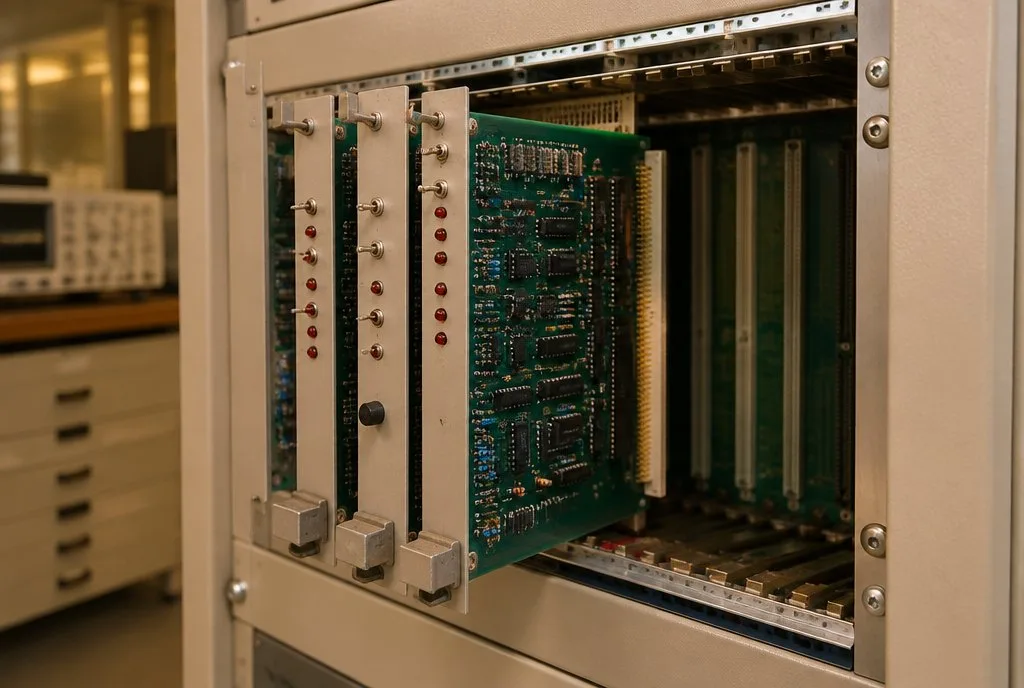
ColdFire controllers in industrial equipment, PowerPC in cars built before the switch to ARM-based controllers around 2020 and in aircraft certified decades ago, and both in the VMEbus and CompactPCI racks that this site covers elsewhere. Emulators such as QEMU and MAME keep the 68000 alive for anyone who wants to learn on it.